


Kazimierz — a district with soul in the heart of Kraków
A history that echoes through cobbled streets and a truly unique atmosphere
Kazimierz is one of the most atmospheric districts of Kraków — a place where history blends with modern life, and every walk reveals another layer of the past. Today it is one of the city’s biggest attractions, but for centuries Kazimierz was much more than that — an independent town, a cultural center, and a meeting place of different worlds.
Founded in 1335 by King Casimir the Great, Kazimierz was meant to be a strong center alongside royal Kraków. At first, it functioned as an independent town located on an island surrounded by branches of the Vistula River. Its creation had strategic importance — it protected Kraków’s southern borders and developed as an important commercial and administrative center.
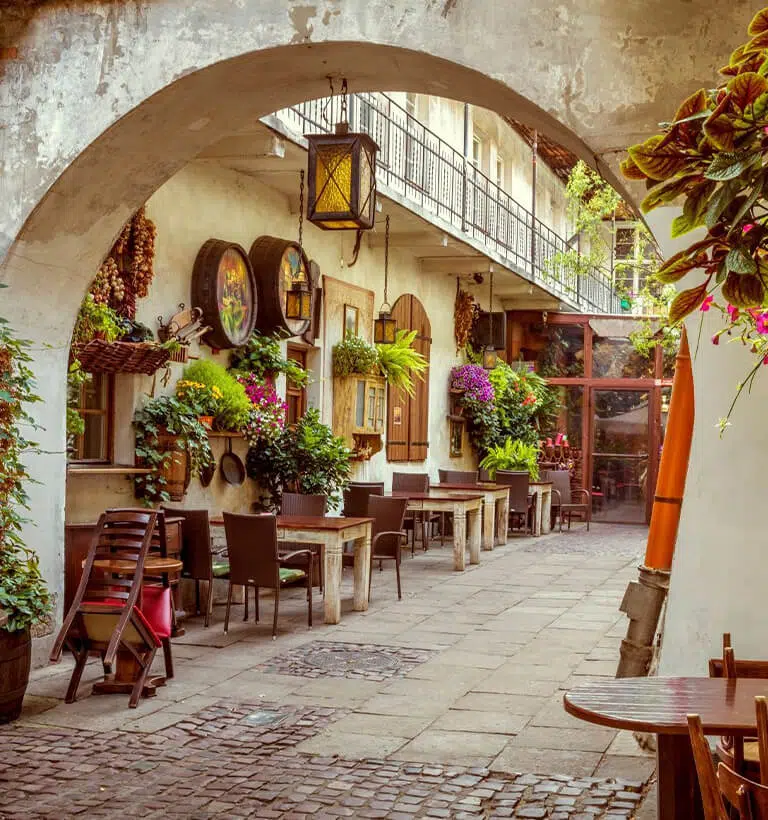
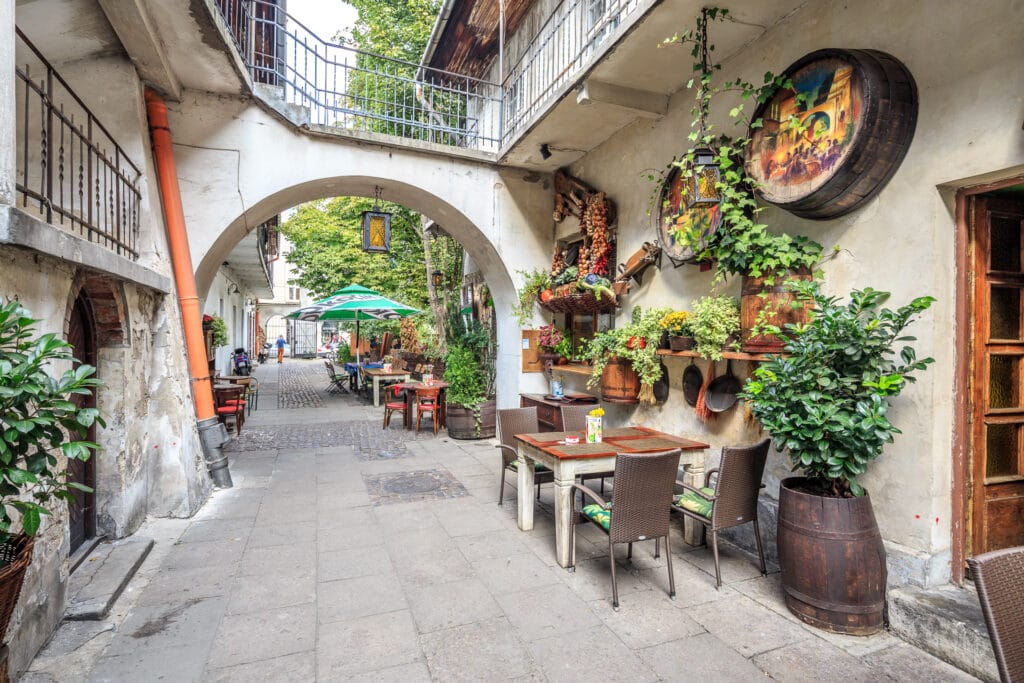
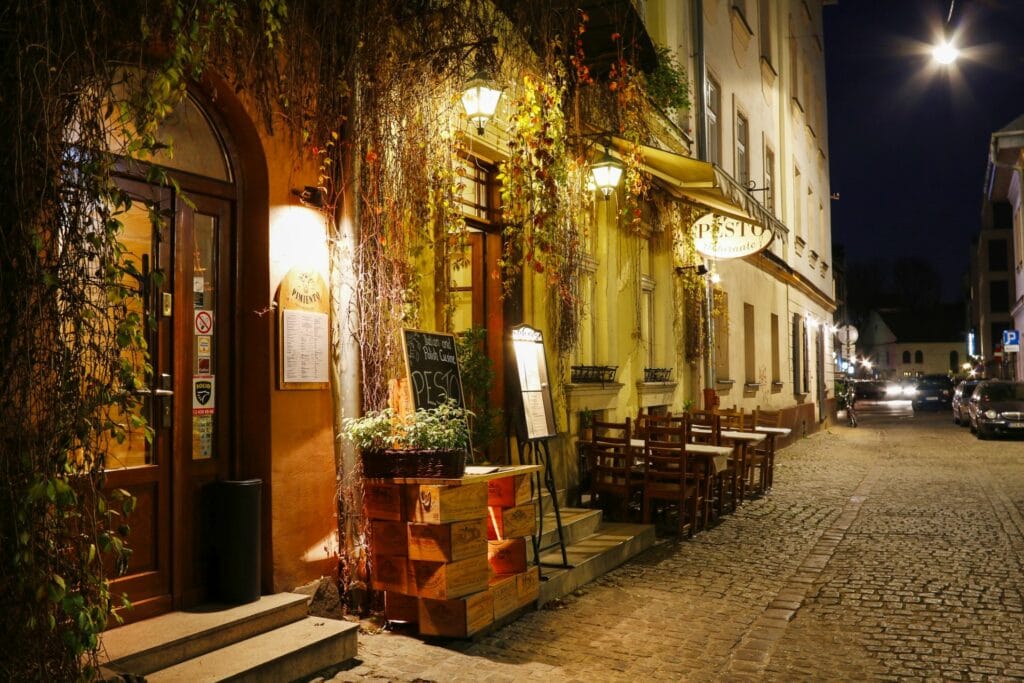
Over time, Kazimierz became a truly exceptional place on a European scale. In the 15th century, a Jewish community settled here, creating the Oppidum Judaeorum — an autonomous “town within a town” that thrived for centuries with its own rhythm of life. Synagogues, schools, printing houses, and merchants’ houses were established, and Kazimierz became one of the most important centers of Jewish culture in this part of Europe.
For centuries, two cultures coexisted here — Christian and Jewish. Their traces are still visible today in the architecture: from monumental churches to historic synagogues and characteristic courtyard arcades.
Walking through Kazimierz, it is impossible not to notice that the place has its own energy. It is not only history written in the walls, but also an atmosphere — peaceful, authentic, and full of life at the same time.
The 19th century brought change — Kazimierz was incorporated into Kraków, losing its formal independence. Yet its character remained unique. In the 20th century, the district experienced tragic events connected with World War II and the destruction of the Jewish community. Despite this, Kazimierz survived, preserving its identity and history.
For years it was a forgotten place, only to experience a true revival in the 1990s. Today, it is one of the most dynamic and fashionable parts of Kraków — full of galleries, restaurants, cafés, and cultural life.
This is where scenes from Schindler’s List were filmed, where the Jewish Culture Festival takes place, and where the streets are alive from morning until late at night.
Estery Street — an intimate story of the great Kazimierz
From the legend of Esterka to the everyday life of one of Kraków’s most atmospheric streets
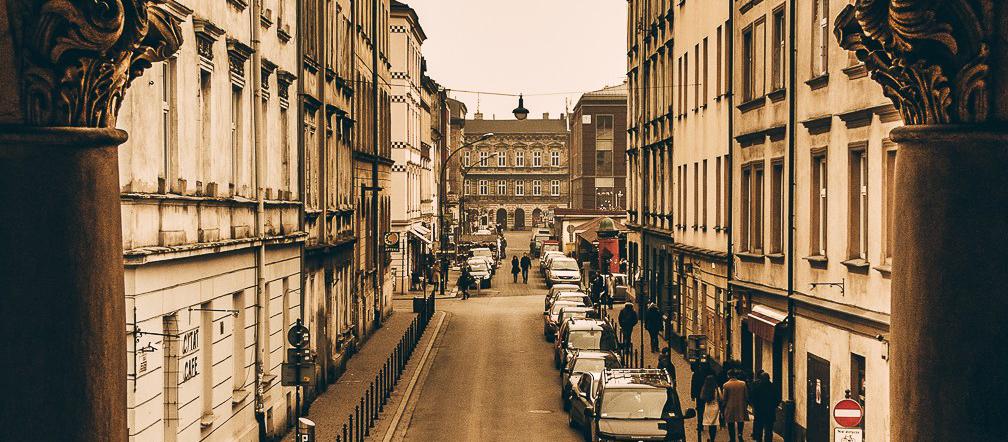
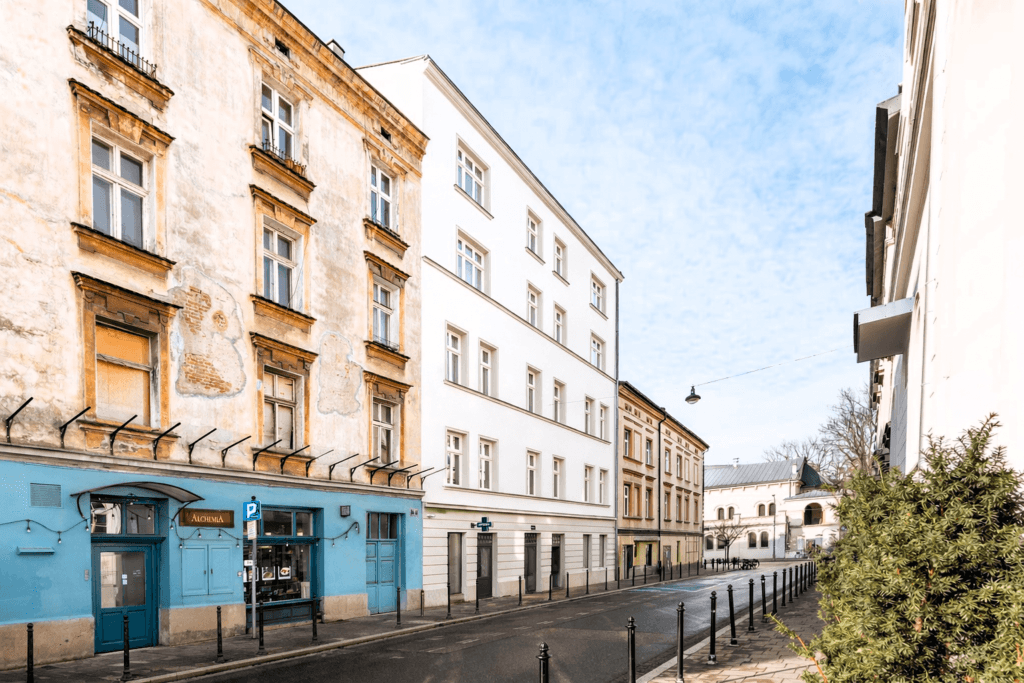
Located in the very heart of Kraków’s Kazimierz district, Estery Street is a small but highly distinctive part of the city, where history is still present at every turn. It is a place where a peaceful atmosphere meets a rich heritage and the authentic character of one of Kraków’s most remarkable districts.
The name Estery Street is no coincidence — it is linked to one of the most intriguing figures in Kraków’s history and legends. According to tradition and historical accounts, Esther (also known as Esterka) was a beautiful Jewish woman who was said to be the beloved of King Casimir the Great.
Although her story continues to spark debate among historians, and some researchers consider it a legend, Esther has become permanently embedded in Kraków’s culture and identity. According to the tale, she was a woman of remarkable beauty and intelligence, who had a significant influence on the king — not only in his private life, but also in his attitude toward the Jewish community.
Stories like this are what make Kazimierz such a special place — full not only of historical facts, but also of legends that shape its atmosphere.
For years, Estery Street was part of the vibrant Jewish Kazimierz. Before World War II, there were artisan workshops, bakeries, small shops, and apartments here, forming a local community full of everyday life. It is in places like this that you can feel the true Kraków best — not in museums, but in spaces that lived and grew through generations.
In the postwar period and during the communist era, many townhouses began to deteriorate, losing their former beauty. Only in the 1990s did the gradual revitalization of Kazimierz begin. Today, Estery Street has regained its character — preserving its authenticity while gaining new life.
Atmospheric cafés, galleries, restaurants, and boutiques have appeared here, creating the unique ambiance of this part of Kraków. It is a place that attracts both locals and visitors from around the world — people looking for more than just sightseeing.
Estery 3 — the address where the apartment is located — is one of the most authentic corners of Kazimierz. It is a space where history meets modern comfort, and every walk allows you to feel the rhythm of the city in its most natural form.
Walking along Estery Street, it is hard not to get the impression that time moves differently here. It is not just a street — it is a story. And one of those stories that stays with you long after leaving Kraków.
Wawel — the history and significance of the heart of Kraków
A place of kings, legends, and events that shaped the history of Poland for centuries
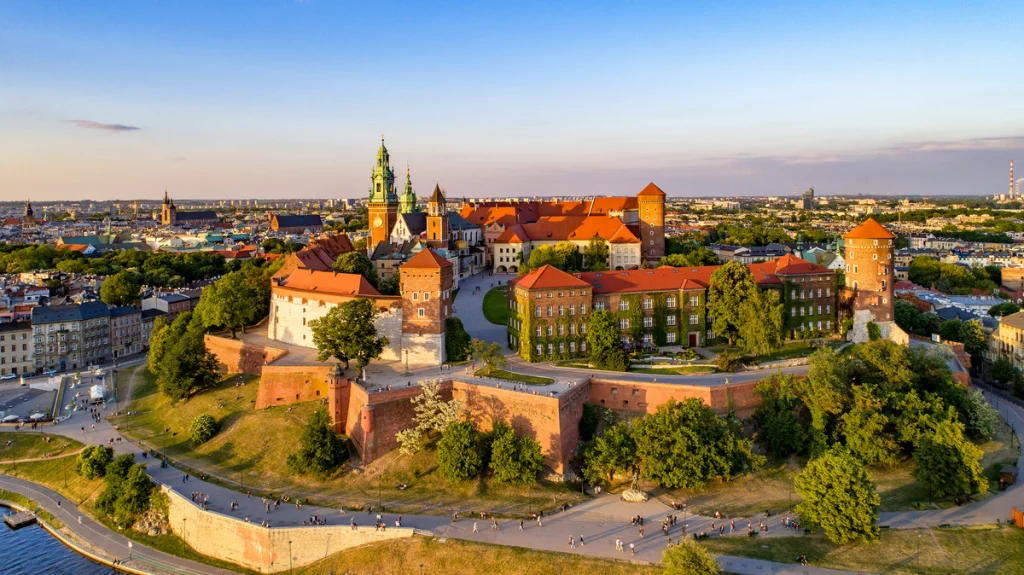
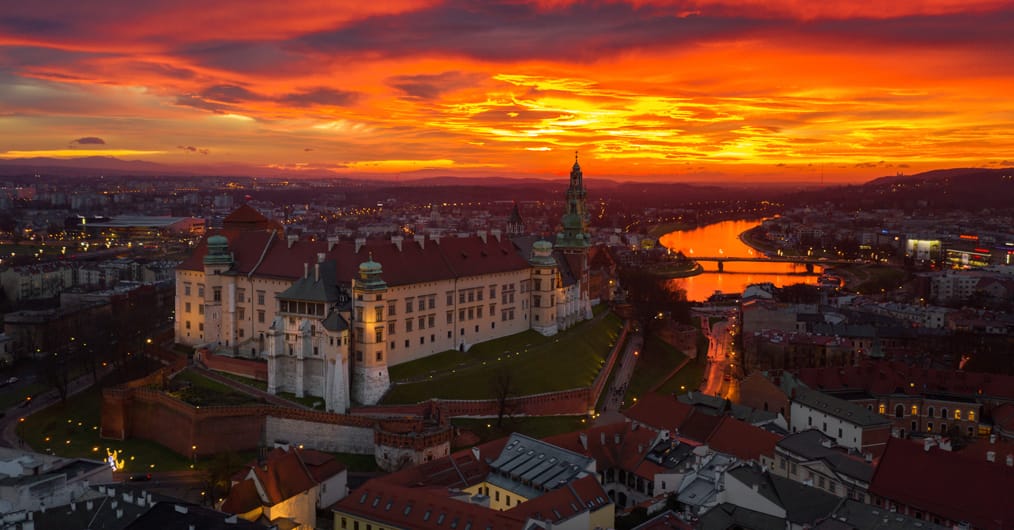
Wawel is a place you cannot miss when visiting Kraków. It is not only one of the city’s most important landmarks, but above all a symbol of Polish history, which has shaped the nation’s identity for centuries. Located on a hill above the Vistula River, Wawel has served for more than a thousand years as a center of power, culture, and spiritual life.
According to legend, this is where Kraków’s story began. The tale of the Wawel Dragon, said to have lived beneath the hill, is one of the best-known stories in Poland and still attracts tourists today. From the very beginning, Wawel was a unique place — not only a real center of life, but also a space filled with symbolism and legend.
As the Polish state developed, Wawel Hill became the seat of rulers. The Royal Castle on Wawel was built here and served as the residence of Polish kings for centuries. Within its walls, the most important political decisions were made, foreign guests were welcomed, and the fate of the country was shaped. Wawel was not only the kings’ residence, but also an administrative and ceremonial center.
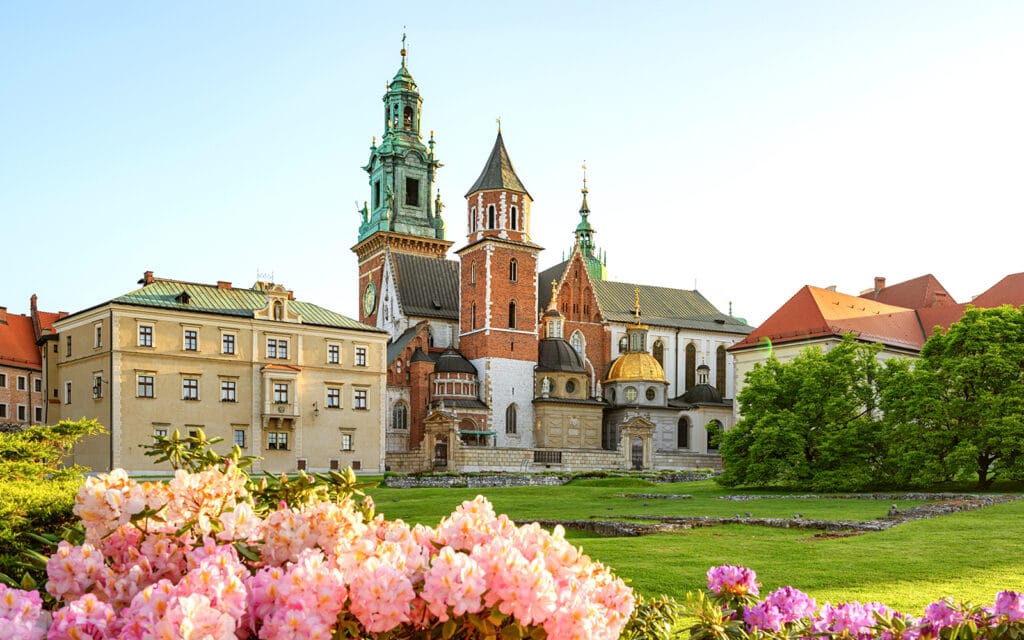
Next to the castle stands the Wawel Cathedral — one of the most important religious sites in Poland. This is where kings were crowned and where they were buried. In the crypts lie not only monarchs, but also outstanding historical figures, which makes Wawel a place of exceptional national significance.
Over the centuries, Wawel has been rebuilt many times, which is why today it presents a mixture of architectural styles — from Gothic, through Renaissance, to Baroque. Each era has left its mark here, creating a space that is both coherent and remarkably diverse.
Although Poland’s capital was moved to Warsaw in the 17th century, Wawel did not lose its importance. It remained a symbol of statehood and history. Even in difficult times, such as the partitions of Poland or the wars, it was a place that reminded people of Polish identity and continuity.
Today, Wawel is one of Kraków’s biggest attractions and a must-see on every visit to the city. It is a place you can explore in many ways — by walking through the courtyard, visiting the royal chambers, or admiring the view over the Vistula. Whether during the day or in the evening, when the castle is illuminated, it makes a huge impression.
But Wawel is not just a monument. It is an experience. It is a moment when history stops feeling distant and becomes real and tangible. Walking around the hill, it is easy to feel that this place has always been — and still is — of immense significance.
For visitors to Kraków, one great advantage is the fact that Wawel is very close to Kazimierz. In just a few minutes, you can walk from the atmospheric streets of the district to one of the most important places in Poland.
The Estery Apartment is located only a few minutes’ walk from Wawel, allowing you to discover this exceptional place at any time of day — without rushing and without the need to plan transport. It is this location that lets you experience Kraków in the most natural and comfortable way.
Main Market Square — the heart of Kraków
Where history meets the everyday life of the city
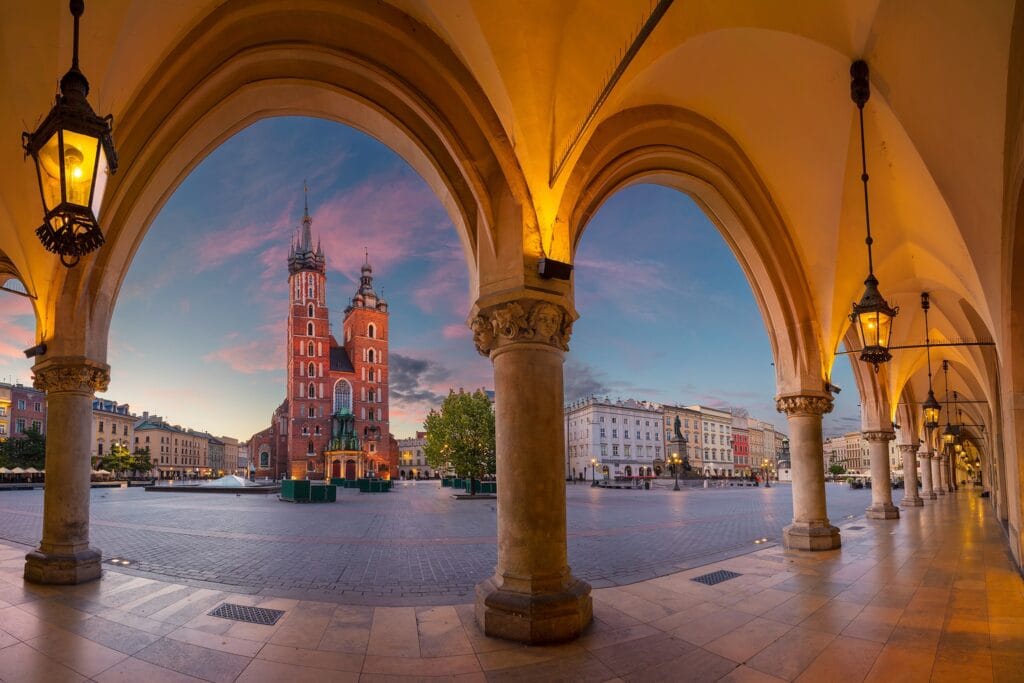
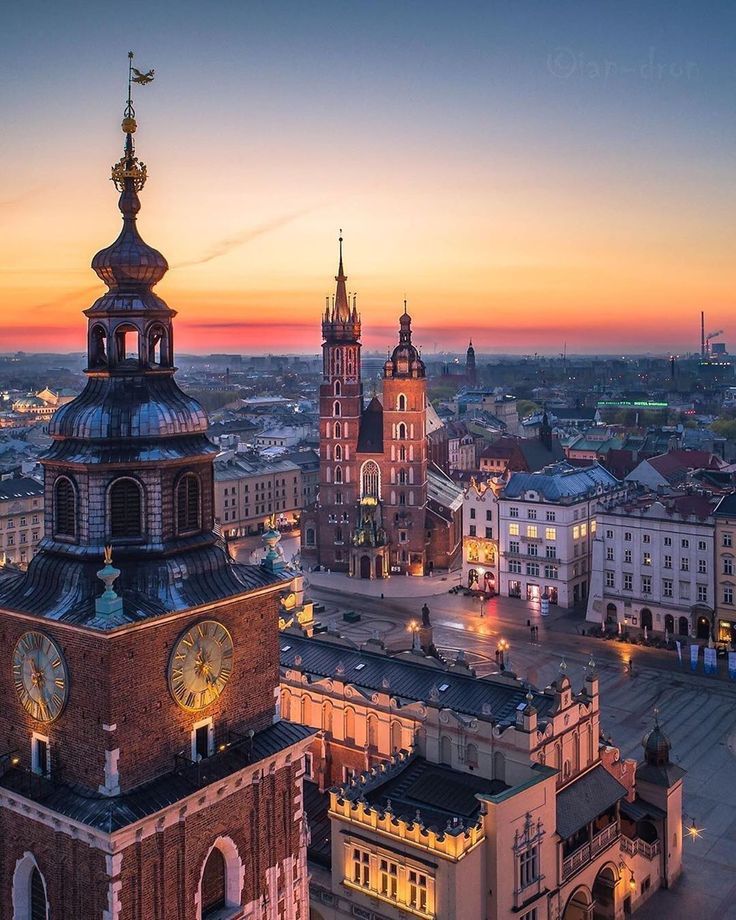
The Main Market Square in Kraków is one of those places that leaves a strong impression from the very first step. It is not only the central square of the city, but a space that has remained its most important point for more than 700 years — both historically and socially. This is where Kraków’s life is concentrated, and its rhythm can be felt at any time of day or night.
Created in the 13th century, the Main Market Square is one of the largest medieval squares in Europe. From the very beginning, it served commercial and representative functions. This was the place where markets, merchants’ meetings, city celebrations, and events of importance not only to Kraków, but to the whole of Poland, took place. For centuries, the square was the economic center of the city, and its significance has not changed to this day.
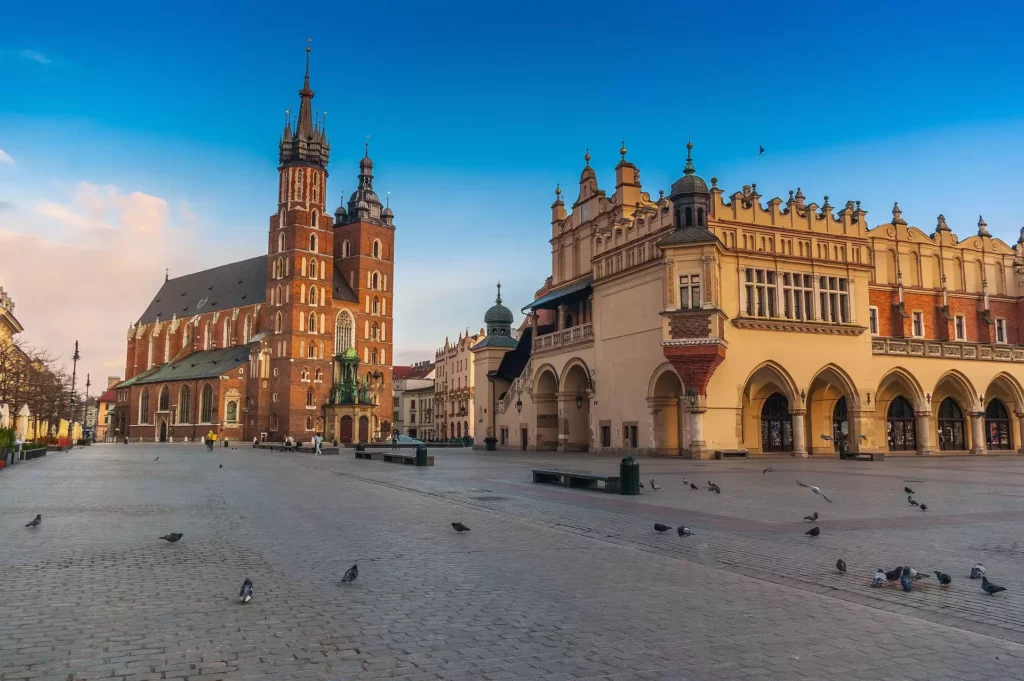
At the very heart of the square stands the Cloth Hall — one of Kraków’s most recognizable symbols. In the past, it was the main hub for the trade of cloth and goods from all over Europe; today, it houses an art gallery as well as stalls with handicrafts and souvenirs. Walking through the Cloth Hall, you can feel the atmosphere of the past, when Kraków was one of the region’s most important trading cities.
Right nearby rises St. Mary’s Basilica, whose distinctive towers are among the most recognizable features of the city’s skyline. Every hour, the bugle call from its tower is played — a symbol of Kraków that has reminded people of its history and tradition for centuries.
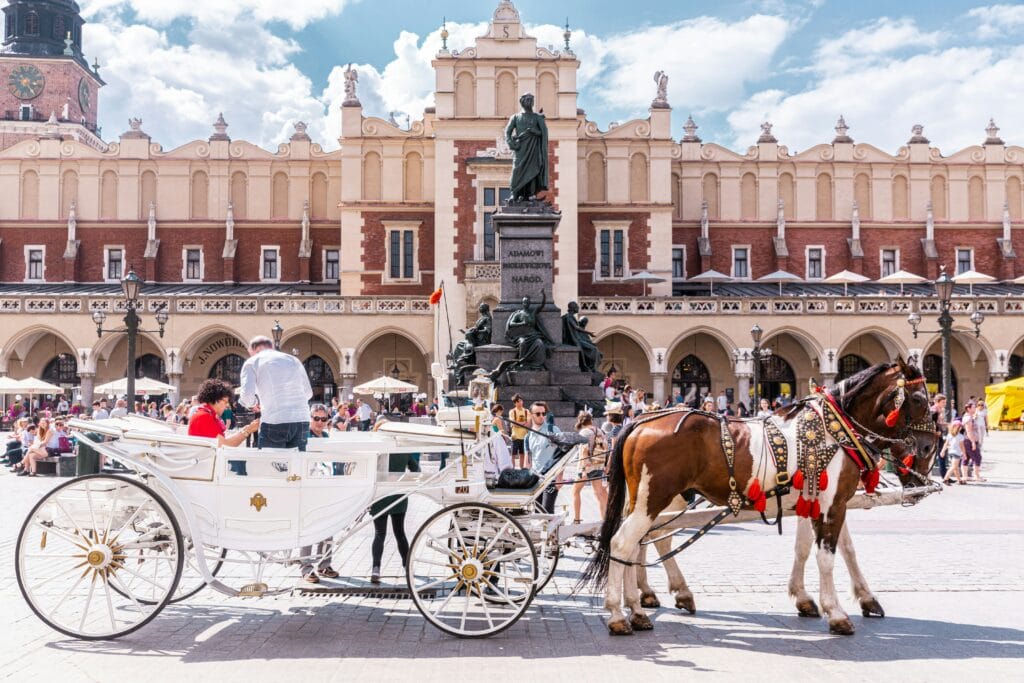
But the Main Market Square is not just about monuments. Above all, it is a living space. During the day, it fills with tourists, street artists, locals, and visitors who stop for coffee in one of the many cafés or restaurants. In the evening, the square changes its character — becoming more atmospheric, elegant, and full of light, creating a unique ambience that is hard to find anywhere else.
It is this energy that makes the Main Market Square not just a tourist attraction, but the true heart of Kraków. It is a place where history is not locked away in a museum, but lives every day — in the architecture, in the sounds, in the people.
One of its greatest advantages is its location. It is a point from which everything is close — Wawel, Kazimierz, the Vistula Boulevards, and the less known but equally interesting corners of the city. That makes it an ideal reference point and a natural starting place for exploring Kraków.
For visitors, the chance to stay near the square is a huge advantage. A morning walk to the square, when the city is just waking up, has a completely different atmosphere from an evening out for dinner or drinks. These are two different experiences that together create a full picture of Kraków.
The Estery Apartment is located just a short walk from the Main Market Square, allowing you to enjoy its energy whenever you wish — and then return to the quieter part of the city, which is Kazimierz.
It is this balance that makes a stay in Kraków more than just a visit. It becomes an experience that stays with you for a long time.
The Wawel Dragon — the legend that created Kraków
A story of a monster, cleverness, and the beginnings of one of Europe’s most beautiful cities
The legend of the Wawel Dragon is one of the best-known stories connected with Kraków — a tale that practically every Pole knows, but which for visitors often becomes their first encounter with the city’s extraordinary atmosphere. It is often from this legend that many begin their Kraków adventure.
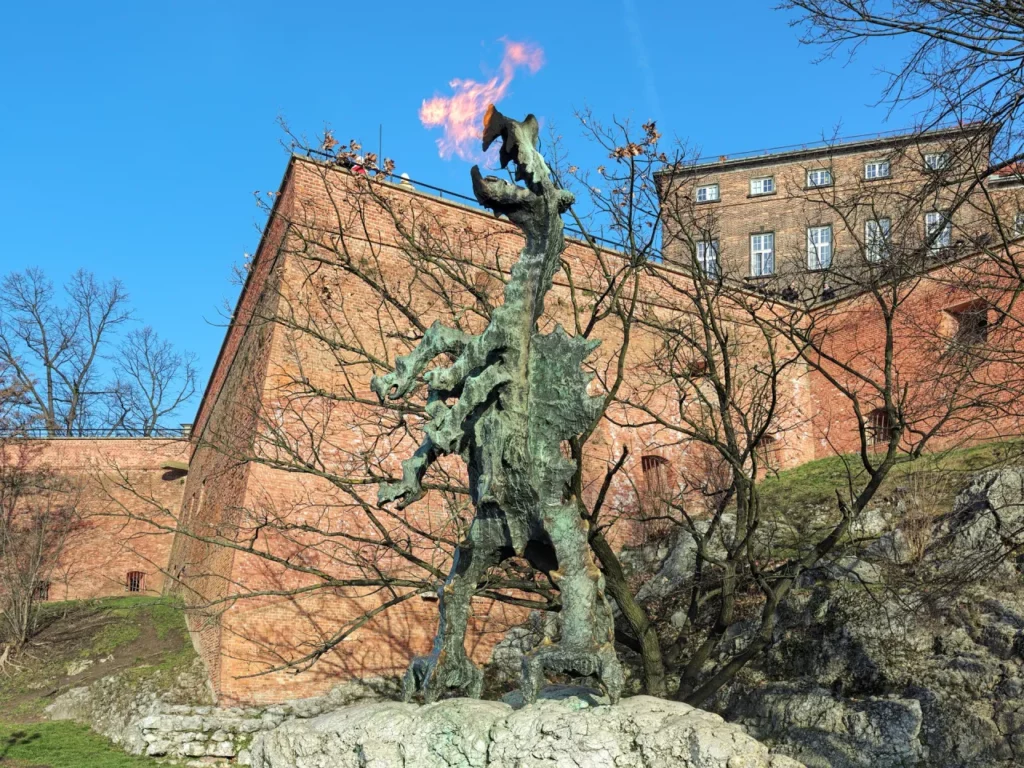
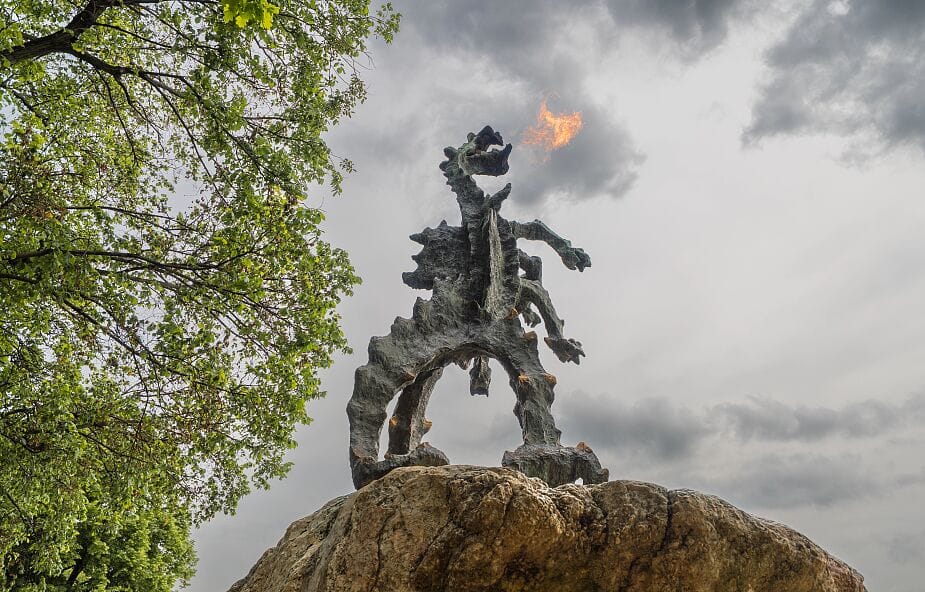
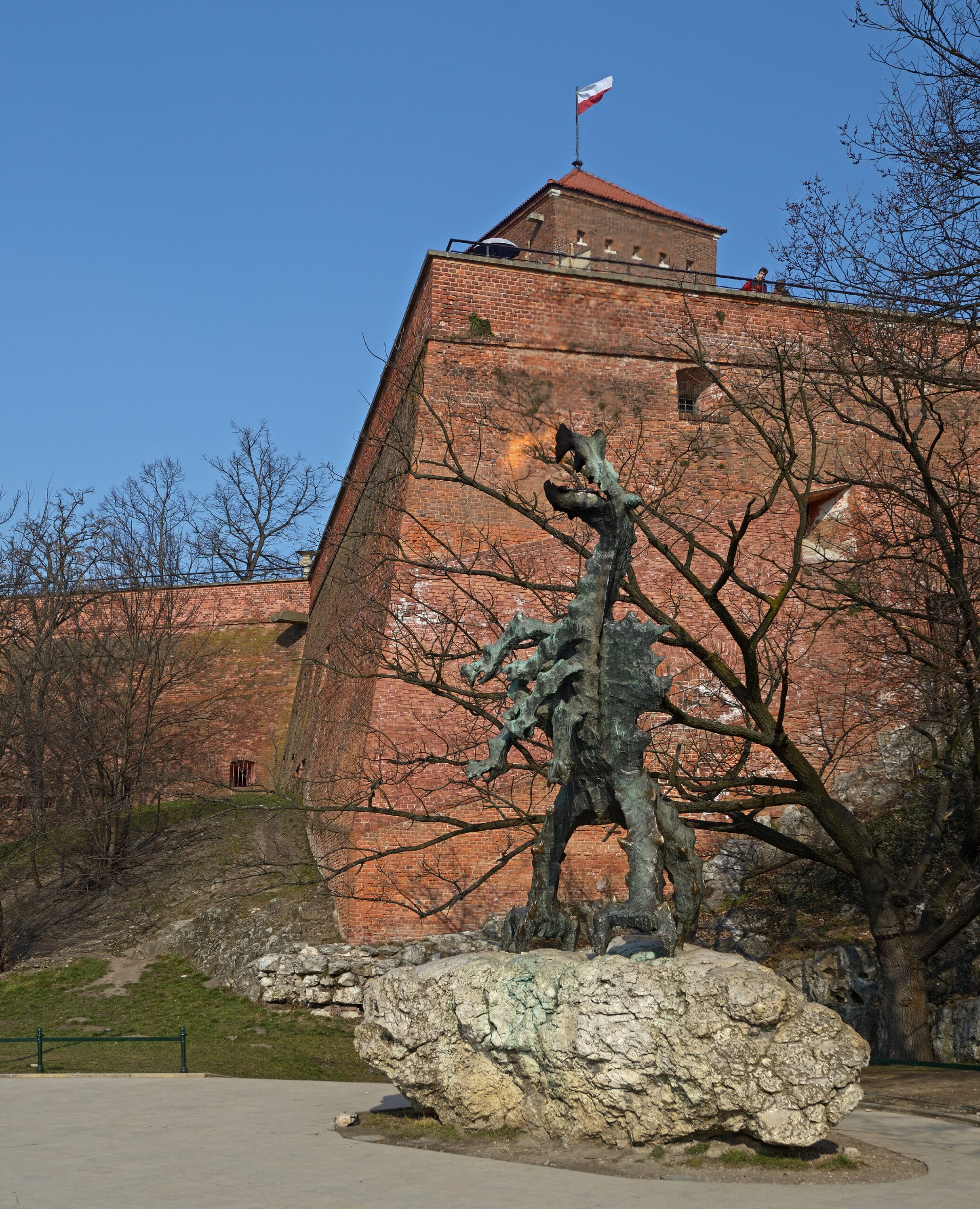
According to old stories, beneath Wawel Hill, in a cave above the Vistula River, there lived a dragon. It was no ordinary monster — it was dangerous, unpredictable, and for a long time unbeatable. The people of Kraków lived in fear, and the dragon regularly demanded sacrifices, ravaging the area and spreading terror throughout the city.
King Krak, who ruled these lands, promised a reward to anyone who would free the city from the beast. Many brave men tried to face the dragon, but none returned victorious. Only a clever young man — depending on the version of the legend, either the shoemaker Skuba or Prince Krak himself — found a way to defeat the monster not with force, but with intelligence.
He gave the dragon a sheep stuffed with sulfur. The dragon, unaware of the trick, swallowed it whole. Soon after, it became unbearably thirsty and drank water from the Vistula River for so long that it burst. In this way, Kraków was freed from danger, and the legend entered history as a symbol of cleverness triumphing over strength.
Although it is only a story, its meaning goes much deeper. The Wawel Dragon became a symbol of Kraków — present in the city’s culture, art, and everyday life. Today, its statue stands at the entrance to the Dragon’s Den, just above the Vistula, and breathes real fire every few minutes, attracting both children and adults.
It is one of those places worth seeing not only for the attraction itself, but for the atmosphere. A walk along the Vistula, the view of Wawel, and the moment when the dragon comes to life create a unique experience that stays in memory for a long time.
The legend of the Wawel Dragon is also part of a larger story about Kraków — a city that has always combined facts with stories. It is precisely these stories that give it character and make it not just a collection of monuments, but a place with soul.
For many visitors, meeting the dragon is a symbolic beginning of sightseeing. It is a moment that sets the tone for the city — full of history, legends, and remarkable places.
Importantly, the Dragon’s Den and the dragon statue are very close to Kazimierz. That means you can walk from the atmospheric streets of the district down to the river in just a few minutes and see one of Kraków’s most recognizable landmarks.
The Estery Apartment is located only a few minutes’ walk from Wawel and the Wawel Dragon, allowing you to explore these places without rushing — at any time of day, exactly as you wish.
It is these details that make a stay in Kraków more than sightseeing. It becomes a story of which you are a part.
Jewish Kazimierz — a history that is still present
A place where the culture, tradition, and everyday life of one of Europe’s most important communities developed for centuries
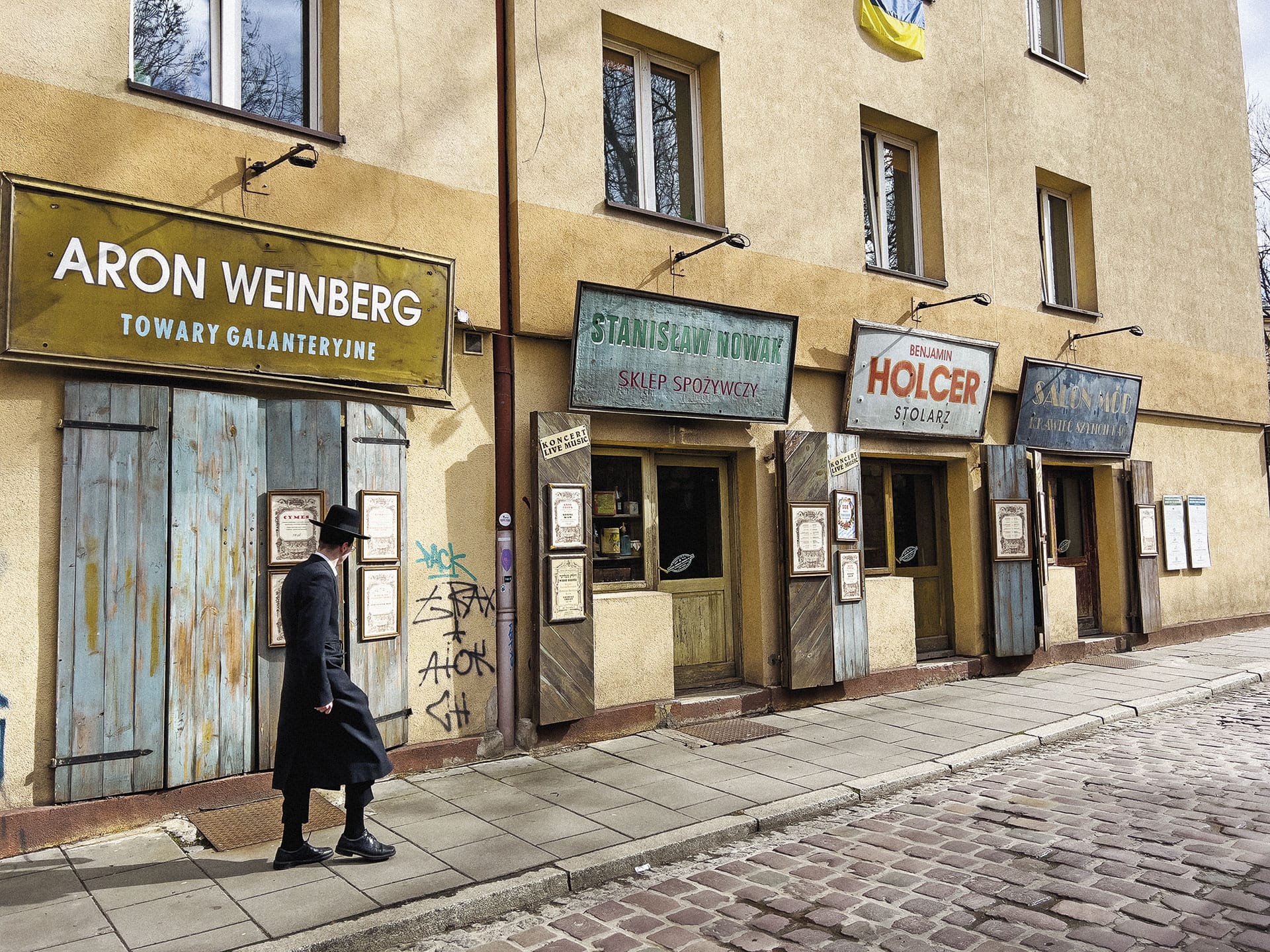
Jewish Kazimierz is one of Kraków’s most exceptional areas — a place where history is not just a memory, but remains tangible in the space, architecture, and atmosphere. It was here that one of the most important Jewish communities in Europe developed for centuries, creating a unique part of the city with enormous cultural significance.
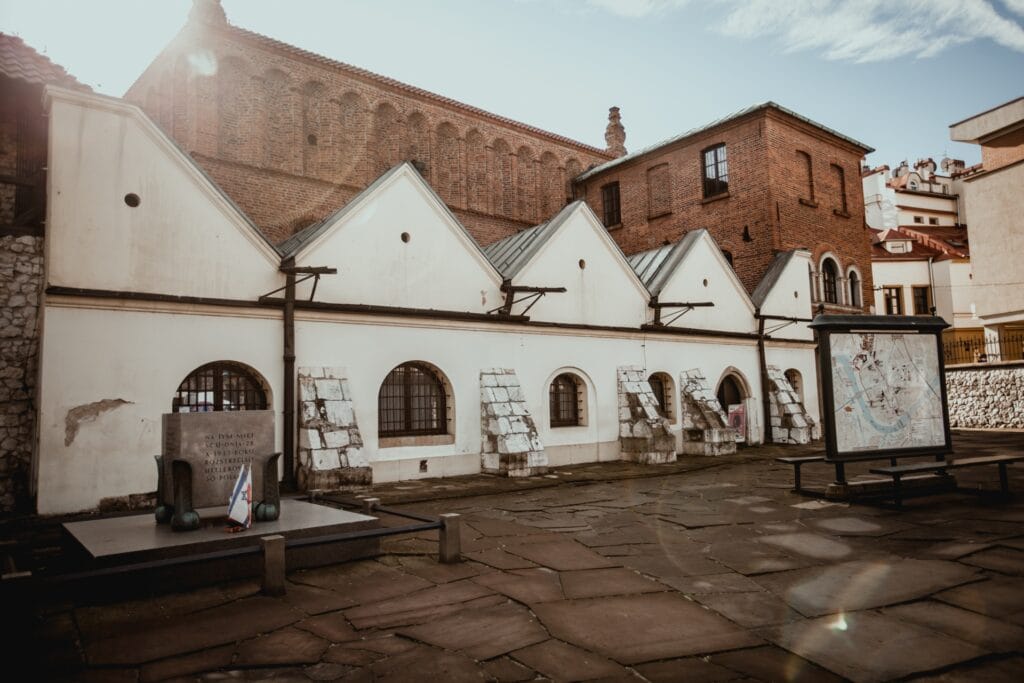
In the 15th century, by decision of King John I Albert, the Jewish community was moved from Kraków to Kazimierz. This created the Oppidum Judaeorum — an autonomous “town within a town,” which for centuries functioned as a separate space of social, religious, and economic life. Synagogues, religious schools, printing houses, and artisan workshops developed within it, forming a lively district.
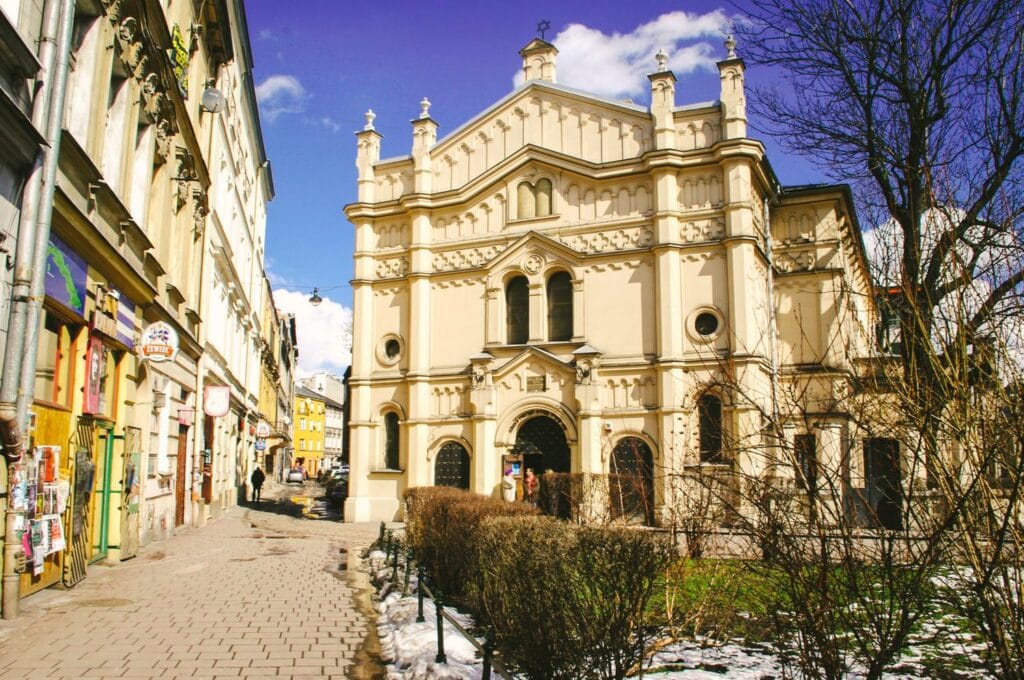
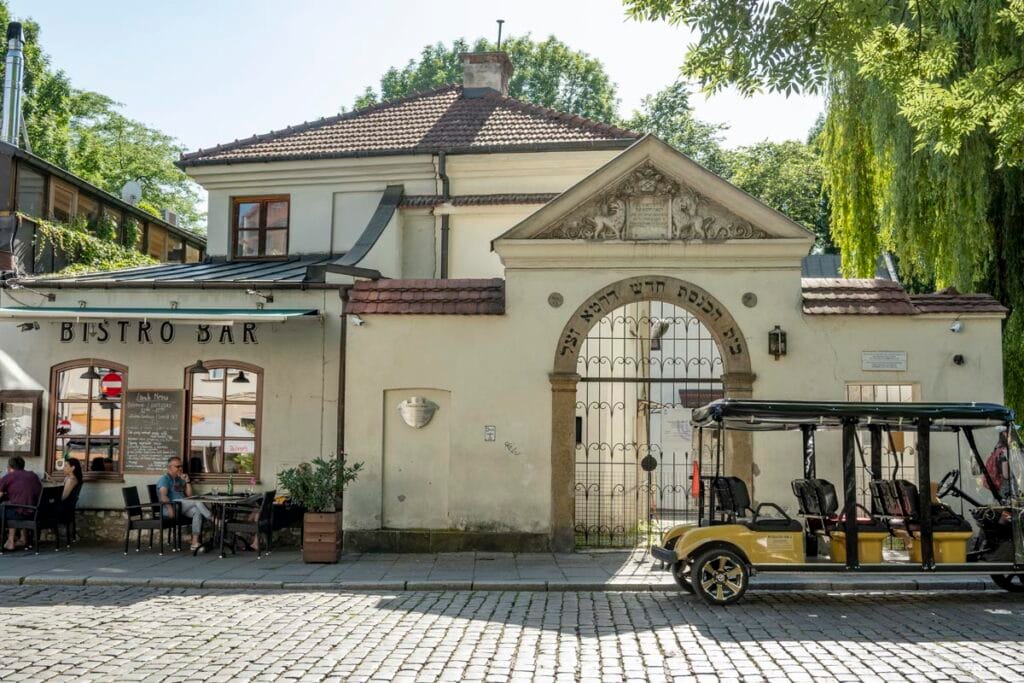
Kazimierz quickly became one of the most important centers of Jewish culture in Central Europe. This is where Rabbi Moses Isserles, known as the Remuh, lived — one of the most important figures in the history of Judaism. His synagogue and cemetery remain important places of remembrance and are visited by guests from all over the world.
Walking through this part of Kazimierz, you can notice the distinctive architecture and spatial layout that differs from other parts of Kraków. Narrow streets, courtyards, synagogues, and townhouses create a characteristic atmosphere that is both peaceful and full of history. It is a place where every part of the space has meaning.
The 20th century brought dramatic changes. The German occupation and the tragic events of World War II led to the near-total destruction of the Jewish community in Kraków. Kazimierz, which had been a vibrant center of life for centuries, suddenly became empty. For many years it remained forgotten, losing its former character.
It was only in the late 20th century that the district began to revive. The film Schindler’s List played a major role in drawing the world’s attention to the history of this place. Since then, Kazimierz has gradually regained importance — not only as a place of remembrance, but also as a dynamic part of the city.
Today, Jewish Kazimierz is a place that combines history and the present. Alongside synagogues and memorial sites, there are restaurants, galleries, and cafés that create the district’s unique atmosphere. It is a space where you can both learn history and feel the contemporary life of Kraków.
One of the most important events is the Jewish Culture Festival, which attracts thousands of people from around the world every year. It is then that Kazimierz shows its true energy — blending the past and the present in an authentic and natural way.
Jewish Kazimierz is not just a place to visit. It is an experience. It is a walk down Szeroka Street, the silence near the Remuh Synagogue, and a moment of reflection that appears unexpectedly.
The Estery Apartment is located in the very heart of this historic part of Kraków, allowing you to discover Jewish Kazimierz in its most authentic form — calmly, without rushing, and exactly as you wish.
It is a place you do not just visit. It is a place you remember.
Kazimierz after dark — Kraków’s most atmospheric side
When the city slows down and the streets begin to live at their own rhythm
Kazimierz after dark is a completely different place than it is during the day. It is the moment when history, architecture, and everyday life begin to create an atmosphere that cannot be fully described — it has to be experienced. When evening falls, cobbled streets, old townhouses, and the warm glow of streetlights build a mood that makes this part of Kraków one of the most unique in Europe.
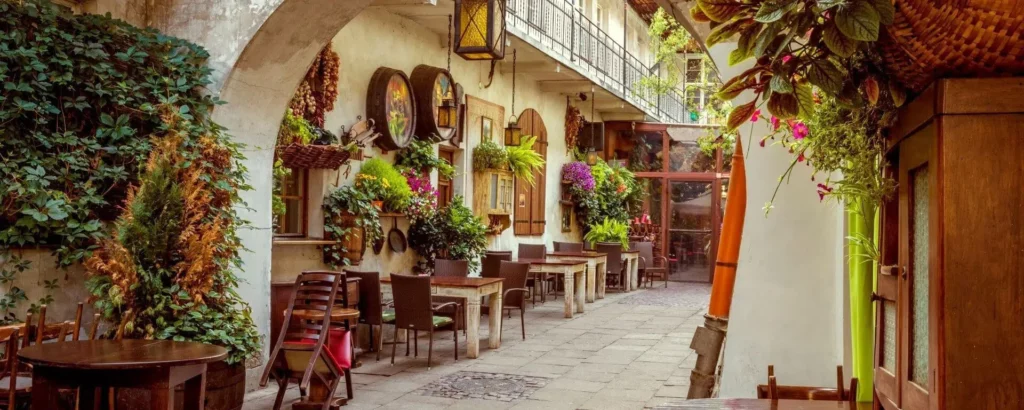
In the evening, Kazimierz changes pace. The daytime rush disappears, and space opens up for peaceful exploration of the city. Restaurants fill with guests, cafés buzz with conversation, and in the background you can hear music coming from hidden venues and courtyards. It is a place that does not impose a pace — it allows you to find your own.
Nowy Square, the center of Kazimierz, becomes a natural meeting point. This is where the paths of locals and tourists cross — people come here for dinner, drinks, or simply to feel the atmosphere of the place. Around the square are some of Kraków’s best-known venues — from restaurants serving creative cuisine to more informal spots with a local vibe.
One of the most characteristic elements of Kazimierz at night is the zapiekanka from Okrąglak. This simple dish has become a symbol of the district and one of those experiences that are an essential part of discovering Kraków after dark. Details like this are what make Kazimierz not just a place, but an experience.
In the evening, you can especially see how authentic this district is. There is no artificiality or excessive tourism here. Kazimierz has preserved its character — a little raw, a little artistic, but always real. It is a place that attracts people looking for something more than standard sightseeing.
A walk down Szeroka or Józefa Street after dark feels completely different from walking there during the day. The light reflected from the walls, the silence between the sounds of the city, and the space that allows you to pause — this is what creates the unique atmosphere of this part of Kraków.
Kazimierz at night is also an ideal place for a peaceful evening. There is no need to plan or look for specific points — you just walk ahead. Every turn may lead to a new place: a small gallery, an atmospheric bar, or a restaurant that does not stand out at first glance, but stays in your memory.
At the same time, it is a place that gives you choice. You can spend the evening actively — discovering Kraków’s nightlife — or quietly, enjoying dinner and the atmosphere. It is this diversity that makes Kazimierz so special.
A huge advantage is that everything is within just a few minutes’ walk. There is no need to use transport or plan how to get around — everything happens around you.
The Estery Apartment is located in the very heart of Kazimierz, allowing you to experience its evening atmosphere in the most natural way. Just step outside for a moment, and you are in the center of it all — and just as easily, you can return to the peaceful space of the apartment.
Kazimierz after dark is something that cannot be planned or fully described. It is a mood you have to feel. And one of those elements of Kraków that stays in your memory long after you return home.
Book your stay
Check availability and book an apartment in one of Kraków’s best locations.
Reservations managed by: